

A team of explorers and researchers discovered over 1,300 large circles meticulously drawn in the sand on the sea bed during a mapping project in the Mediterranean Sea. These structures, resembling something out of a science fiction movie, were found to be almost identical to each other, with precise edges and a repeated geometric pattern.
The discovery was made by Laurent Ballesta, a National Geographic explorer and photographer, and his team, who were using advanced mapping technology to investigate deep Mediterranean areas. Upon examining the data, they discovered distinct rings on the seabed, which were abundant and seemed to be organized in a non-random pattern.
Scientists and researchers from various fields are fascinated by the discovery of numerous symmetric circles in an extreme environment, sparking interest in uncovering the natural phenomenon responsible for their formation. This article delves into the location of these circles, the discovery process, proposed hypotheses for their origin, and the potential insight they offer into ancient Mediterranean secrets.
Where and when were these circles found and by whom?
The circular patterns were found in a remote part of the Mediterranean Sea, close to Corsica, at a depth of nearly 120 meters. This area is seldom explored by regular divers. The circles were first noticed through detailed sonar readings from previous expeditions, revealing repeated circular impressions on the ocean floor.
The team, captivated by the images, joined forces with researchers familiar with the anomalies on submarine maps to explore the site and closely examine the structures. Utilizing a research vessel, specialized diving gear, and advanced cameras, they meticulously documented the circular formations, verifying their considerable size, distinct features, and ancient origins.
Each circle, with a diameter of tens of meters, appears to have been discreetly placed in the sand, with precise edges surrounding a darker core. When combined, the total area taken up by these circles amounts to hundreds of thousands of square meters, comparable to multiple football fields placed next to each other.
Experts’ opinions on this puzzle
Scientists started examining the components of the circles in an attempt to understand their origins. Rather than evidence of impacts or recent craters, they discovered formations associated with coral algae and ancient sediments that had developed over long periods of time.
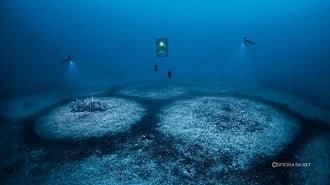
The rings observed by researchers could be linked to the development and wearing away of limestone algae, which once created authentic “living rings” in the area. Changes in sea level and environmental factors over time may have led to the formation of the circular patterns visible today.
The team gathered cylindrical sediment samples from inside and around the circles to determine their age using carbon dating. Findings suggest that the formation of these structures started approximately 21,000 years ago during a period with distinct sea levels and climate compared to today. This sheds light on how the circles document a prolonged natural process spanning various geological eras of the Mediterranean.
Why are these circles so uncommon and remarkable?
Those who view the circle images are struck by the impressive blend of size and accuracy. The vast rings, numbering over a thousand, resemble each other closely and are scattered in a distant, isolated location. Their nearly perfectly defined edges are uncommon in natural formations like these.
The circles are found in an area where sunlight is scarce, making it difficult for photosynthesizing organisms like coral algae to thrive there in the past. This indicates that the location has experienced significant changes over millennia, likely due to fluctuations in sea level and global climate.
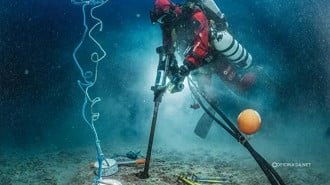
The pattern of the rings remains well-preserved over time, indicating that the process that formed them was stable and long-lasting.
How this finding can benefit the field of science
The circular formations found at the bottom of the Mediterranean may seem like just a visual oddity, but they actually hold valuable information about past processes. Researchers can gain insights into sea level changes, ocean currents, climate history, and the distribution of marine life by studying how these structures were created.
These data assist in improving models that aim to reconstruct the planet’s recent history, such as glacier melting periods and ocean circulation changes. Moreover, the advanced technology utilized for mapping and recording these features, comprising high-resolution sonars, specialized cameras, and extensive technical dives, highlight the significant advancements in underwater exploration tools in recent times.
Discoveries such as this highlight how limited our knowledge is regarding the ocean floor, even in supposedly well-explored areas like the Mediterranean. This paves the way for further exploration, new scientific inquiries, and captivating visuals to engage the public with the underwater realm.

